
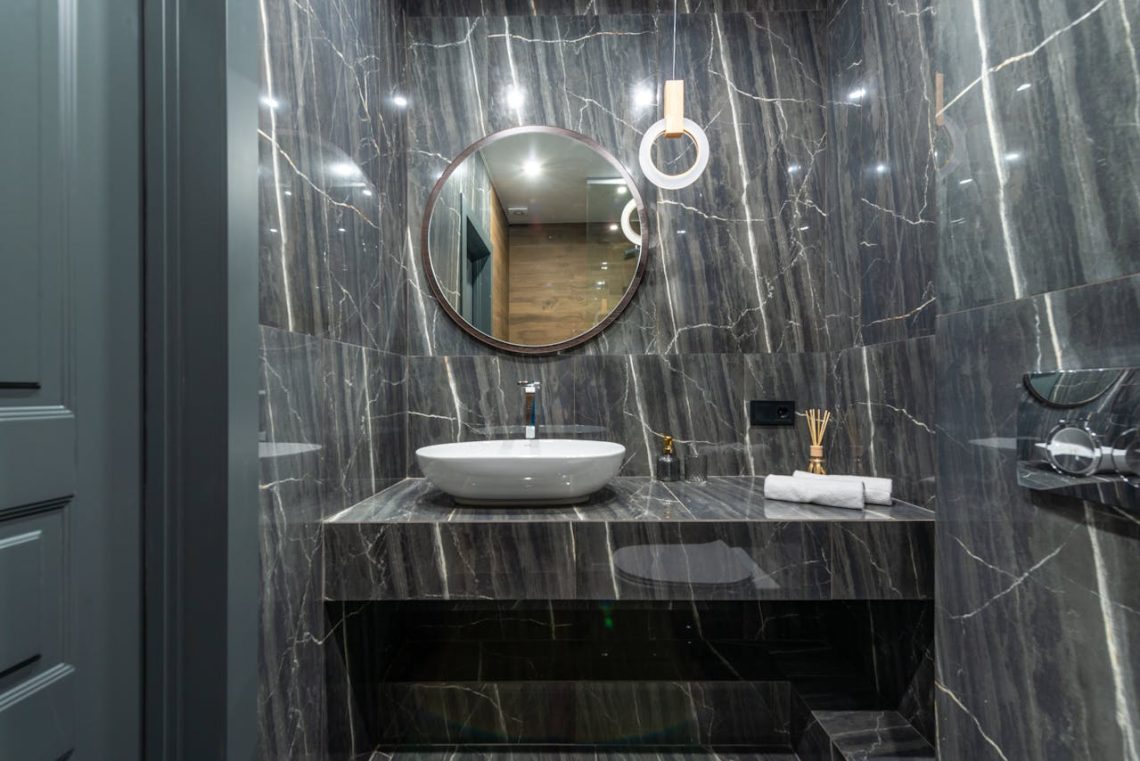
Natural stone remains a premier choice for bathroom design because it offers a permanence that synthetic alternatives simply cannot match. While trends in interior design shift rapidly, the use of materials like marble, granite, and limestone has persisted for centuries. This longevity is not accidental. Stone provides a tactile connection to the earth that grounds a space, turning a functional room into a sanctuary. Beyond the immediate visual impact, stone surfaces offer exceptional durability when treated correctly. Stone bathrooms do not just look expensive; they feel substantial and permanent in a way that elevates the entire home.
Selecting The Right Material For Wet Environments
Choosing the right stone for a bathroom goes beyond colour and pattern—it’s about understanding the material’s properties. Marble is highly sought after for its classic veining and luxurious look, creating a bright, spacious feel. However, as a soft, porous metamorphic rock made of carbonate minerals, it requires careful maintenance and can be damaged by acidic toiletries.
Granite is a tougher alternative, formed from cooling magma. Dense and scratch-resistant, it handles humidity and heavy use well, making it ideal for family bathrooms. Its speckled appearance hides water spots and dust, offering a practical and consistent aesthetic compared to marble’s sweeping patterns.
Travertine, with its warm, Mediterranean feel, is another popular choice. This sedimentary rock features natural pitted holes, usually filled with resin or grout for a smooth, water-resistant surface. Its matte finish feels comfortable underfoot and provides natural slip resistance, unlike polished marble or granite.
Structural Support And Installation
The decision to install stone goes beyond surface-level aesthetics; it impacts the engineering of the room. Stone tiles and slabs are significantly heavier than ceramic or porcelain counterparts. Before laying a single tile, you must confirm that the floor structure can support the additional dead load. In many timber-framed houses, this might require strengthening the floor joists to prevent sagging over time.
Deflection, or the amount a floor bends under weight, is a critical enemy of natural stone. Because stone is rigid and brittle, it cannot flex with the floor. If the substrate moves too much, the stone will crack. Installers often use a decoupling membrane or a cement backer board to provide a rigid, stable base that isolates the stone from the movement of the subfloor. This technical preparation is vital to protecting the investment and preventing hairline cracks from appearing months after the renovation is finished.
Maintenance For Longevity
Living with natural stone requires a specific approach to cleaning and maintenance. The most critical step is sealing. Natural stone is porous, meaning it has microscopic channels that can absorb liquids and lead to staining. An impregnating sealer should be applied upon installation and reapplied periodically. This sealer penetrates below the surface to repel water and oils without altering the appearance of the stone.
Cleaning protocols must also change when you switch to natural materials. Standard bathroom cleaners often contain acids or harsh chemicals that can strip the sealer or dull the polish of the stone. You should use pH-neutral cleaners specifically formulated for stone. Even common household substances like lemon juice or vinegar can etch calcareous stones like marble and limestone, leaving dull spots. Wiping up spills immediately and keeping the surface free of standing water will preserve the finish for decades.
The Financial Perspective
A stone bathroom represents a significant financial outlay, often costing double or triple the price of ceramic or porcelain installations. This cost includes not just the material itself, but the specialised labour required to cut, seal, and install it properly. However, this expense should be viewed through the lens of long-term value. Real estate market analysis consistently shows that high-quality natural materials are desirable features for potential buyers.
Unlike dated ceramic tiles that might need replacing to suit changing tastes, well-maintained stone is timeless. It ages gracefully, developing a patina that many find attractive. This longevity means that while the initial cost is higher, the lifecycle cost can be lower as the need for replacement is virtually eliminated. For a homeowner looking to add genuine equity to their property, a natural stone bathroom is a strategic improvement that offers both immediate enjoyment and lasting asset value.